

After-Hours Commercial Security in Atlanta: Cameras, Access Control & Lighting That Work Together
When the workday ends, your property still needs visibility, controlled entry and dependable infrastructure. Build a security plan that connects the equipment to the way your business operates.
A camera aimed at a dark doorway, an untracked building key and a poorly lit loading area can leave gaps in an otherwise well-equipped commercial property.
For Atlanta business owners and property managers, an effective after-hours strategy starts by looking at the whole site: how people enter, what cameras can actually capture, where lighting falls short and whether the supporting network stays reliable.
Mounted Up designs and installs commercial surveillance, access control, networking, structured cabling and lighting solutions. The goal is a practical system that helps your team see important activity, manage access and retrieve useful information when an incident needs review.
Plan camera coverage around real activity.
Start with the areas where people, vehicles and valuable equipment move. Main entrances matter, but rear doors, loading docks, service corridors and vehicle approaches may need equally careful attention.
- Entrances and exits: Position cameras to capture useful views of people approaching and passing through doors.
- Loading and delivery areas: Review vehicle positions, overhead doors and places where stored materials can obstruct the view.
- Parking and perimeter areas: Balance wide-area visibility with the detail needed at specific locations.
- After-dark performance: Check actual footage at night, including moving subjects, glare and transitions between bright and dark areas.
Resolution alone does not determine whether footage will be useful. Lens selection, mounting height, viewing angle, lighting, recording settings and distance all affect results. Reading moving license plates may require a dedicated design.
Keep building access aligned with your operations.
Physical keys can become difficult to track as employees, tenants, cleaners and vendors change. Electronic access control can help authorized administrators manage credentials, apply schedules and review access events.
Depending on the selected system, doors can use cards, key fobs, PINs or mobile credentials. Compatible access and video systems can also make it easier to review footage associated with a door event.
Employee & Vendor Access
Assign appropriate access by role, area and schedule. Remove credentials promptly when someone no longer needs entry.
Doors That Work Properly
Assess locks, closers, frames, readers and door-position hardware together. A reader cannot solve a door that does not reliably close and latch.
Door hardware and access-control designs must preserve required emergency egress and meet applicable building and life-safety requirements. Final hardware selection depends on the opening and site assessment.

Light the areas your people and cameras depend on.
More brightness is not always better. Uneven lighting, exposed glare and poorly aimed fixtures can make a site uncomfortable to navigate and complicate camera images.
A commercial lighting plan should consider fixture placement, mounting height, beam distribution, neighboring properties and the tasks performed in each area.
- Employee entrances, sidewalks and customer approaches.
- Parking spaces, drive aisles and pedestrian crossings.
- Loading docks, service doors and equipment storage.
- Lighting schedules, photocells and suitable occupancy controls.
Mounted Up can assess lighting alongside your surveillance coverage so the improvements support the same property goals.
Commercial & Industrial LED Fixture Types
We specify and install LED fixtures appropriate for commercial environments—from high-ceiling warehouses to retail showrooms and exterior parking facilities.
Get fixture recommendations and an installation quote based on your space, ceiling height, existing electrical infrastructure and lighting requirements.
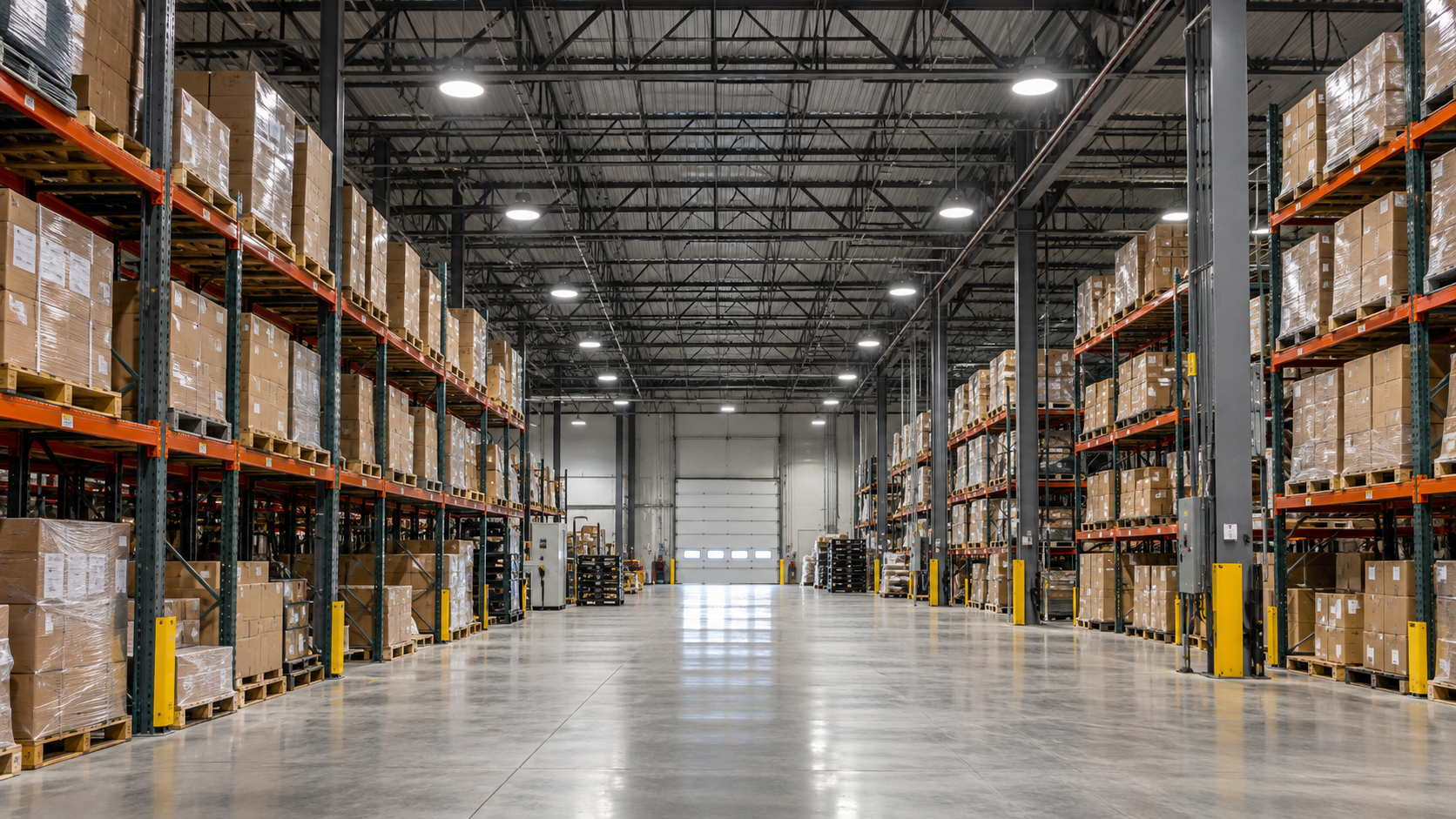
LED High-Bay Fixtures
For warehouses, gyms and manufacturing facilities. Fixture output and optics are selected for mounting height, aisle layout and the work performed below.
LED Flat Panels
For offices, retail spaces and schools. Low-profile options provide broad illumination with selection based on ceiling compatibility, visual comfort and room use.
LED Strip Lights
For storage areas and utility spaces. Commercial linear strip fixtures provide practical illumination for back-of-house areas, work zones and service rooms.
LED Troffers
For office, medical and retail environments. Recessed fixtures can support ceiling-grid installations and planned upgrades from compatible existing fixtures.
LED Pole Lights
For parking lots and campuses. Planning considers pole locations, mounting height, light distribution, pedestrian routes and potential spill onto adjacent properties.
LED Wall Packs
For building exteriors and loading docks. Appropriate shielding and aiming help illuminate service areas, building approaches and perimeter walkways.
LED Canopy Lights
For covered entrances and drive-throughs. Select fixtures suited to the canopy structure, mounting conditions and exposure to weather.
LED Controls & Dimming Systems
Manage compatible fixtures using dimmers, schedules, occupancy sensors or daylight controls. Equipment compatibility is checked before installation.
Support the spaces your team uses every day.
Interior lighting deserves the same planning as the parking lot. Offices, showrooms, storage rooms and utility areas have different needs for brightness, glare control and operating schedules.
An LED upgrade can provide an opportunity to reassess fixture layout, dimming compatibility and maintenance access. Energy and maintenance savings depend on the existing equipment, replacement design and operating hours.
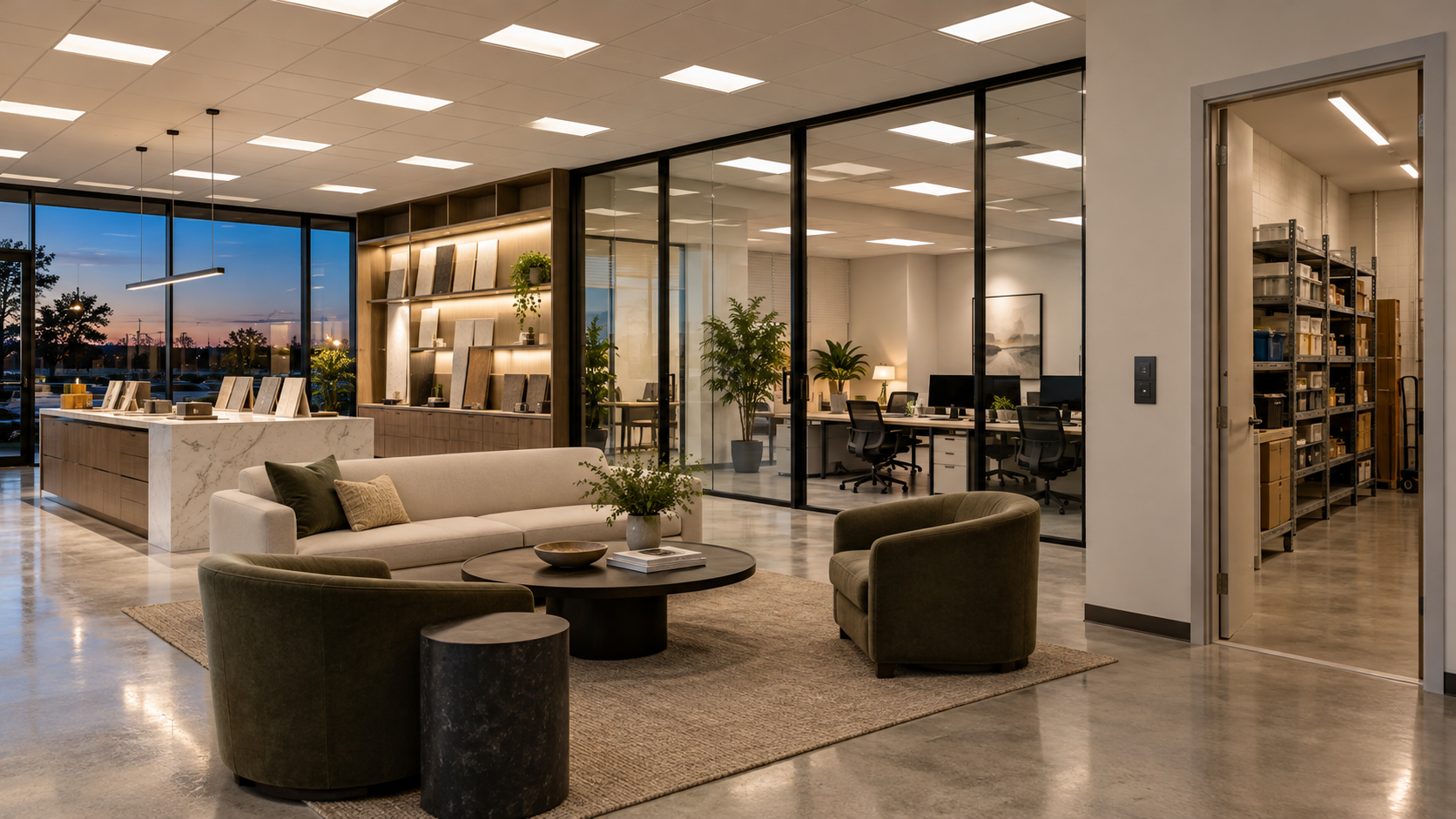
The network behind your security matters.
A well-positioned camera still needs reliable power, connectivity and recording. Cabling faults, overloaded network equipment, incorrect settings and insufficient storage can undermine an installation.
Mounted Up can evaluate structured cabling, network connections and supporting equipment as part of the project. Planning may include appropriate PoE capacity, secure remote access, firmware maintenance and backup power for selected devices.
Your team should also know how to check system health, find an event and export footage. Recording retention should reflect your operational needs, storage capacity and applicable policies.
Your after-hours commercial security checklist.
- Can you clearly see entrances, service doors and pedestrian routes?
- Do cameras capture useful nighttime footage of moving people and vehicles?
- Are loading docks and storage areas obscured by parked vehicles, landscaping or materials?
- Do controlled doors close and latch consistently?
- Are former employees’ and vendors’ credentials removed?
- Are failed lights, glare and dark patches addressed?
- Can an authorized person access recordings and export an incident?
- Is someone responsible for reviewing important alerts and following a response procedure?
Document the gaps and prioritize them by exposure, operational impact and budget. An assessment can help distinguish equipment that needs replacement from equipment that needs adjustment or better supporting infrastructure.
Planning your commercial security upgrade.
Can Mounted Up quote cameras, access control and lighting together?
Yes. Request a combined project assessment and describe your property, existing equipment and priorities. The proposed scope can address surveillance, controlled entry, LED lighting and supporting infrastructure.
Do security cameras need exterior lighting?
It depends on the camera and the required image. Infrared-capable cameras can operate in darkness, but suitable visible lighting may improve color information and scene visibility. Actual performance should be checked at night under the conditions the camera will encounter.
Can existing lighting be upgraded to LED?
Many properties can use LED retrofit options or replacement fixtures. The appropriate approach depends on fixture condition, electrical compatibility, mounting, controls and the desired lighting performance.
Does every property need a completely new security system?
No. An assessment may identify equipment that can remain in service. A phased upgrade can address critical gaps first, subject to compatibility, condition and support availability.
What should I include when requesting a quote?
Share the property location, building type, areas of concern and services needed. Photos of existing cameras, doors, fixtures and equipment can help. For lighting, include approximate ceiling or pole heights if known.
Build a clearer plan for your property after dark.
Connect camera coverage, controlled access, commercial LED lighting and dependable infrastructure with a scope built around your property.