
Cable Testing & Certification in Atlanta: What Your Business Should Know
Unreliable connections can interrupt cameras, workstations, and everyday operations. Understand what cable testing can reveal—and when your project needs documented certification.
Your network depends on more than the equipment you can see.
A new switch, faster internet plan, or upgraded camera does not resolve every connection problem. The cabling between devices also matters. A damaged run, poor termination, or unsuitable component can affect the link your equipment relies on.
Cable testing and certification in Atlanta helps businesses evaluate that physical infrastructure before making expensive changes. Mounted Up supports commercial cabling investigations, new installations, and performance documentation across Atlanta and surrounding communities.
The first step is choosing the right level of testing. A basic wiring check and a certification test answer different questions.
Testing, qualification, and certification: what is the difference?
“Cable testing” is a broad term. Tell your installer whether you need a connection checked, an assessment of application support, or a formal certification report.
| Test level | Main question | Typical purpose |
|---|---|---|
| Verification | Is the cable wired correctly? | Identify wiring faults such as opens, shorts, and incorrect connections. |
| Qualification | Can the link support a particular application? | Assess application capability within the selected tool’s testing limits. |
| Certification | Does the link meet the selected cabling performance limits? | Measure required parameters and document pass/fail results against the chosen test standard and configuration. |
Certification is more than checking whether a device connects. For supported copper links, the selected test can evaluate parameters such as wire map, insertion loss, return loss, and crosstalk. The required measurements depend on the cable category and test configuration.
When should a business request cable testing?
Before accepting a new installation
When an office, warehouse, or retail space receives new cabling, testing helps establish the condition of the installed links. If your project specification requires certification reports, include those requirements before work begins.
When a camera or workstation keeps disconnecting
Imagine a loading-dock camera that repeatedly goes offline while other cameras remain available. Its cable run and terminations deserve investigation alongside power, network configuration, and the camera itself. Testing helps determine whether the physical link is contributing to the problem.
Before reusing cabling in a new location
Existing outlets may look ready for use, but appearance alone does not establish cable condition or performance. A business moving into an occupied suite can request testing before relying on the old cabling for daily operations.
During an expansion or network upgrade
Adding access points, workstations, or connected security equipment is a good time to review the links serving those devices. Confirm the intended application and testing requirements rather than assuming every existing cable run is suitable.
Have a cable problem to investigate?
Send your project address, approximate cable count, and a short description of the issue. These details help Mounted Up review the scope and reduce back-and-forth before scheduling.
Professional equipment. A project-specific test plan.
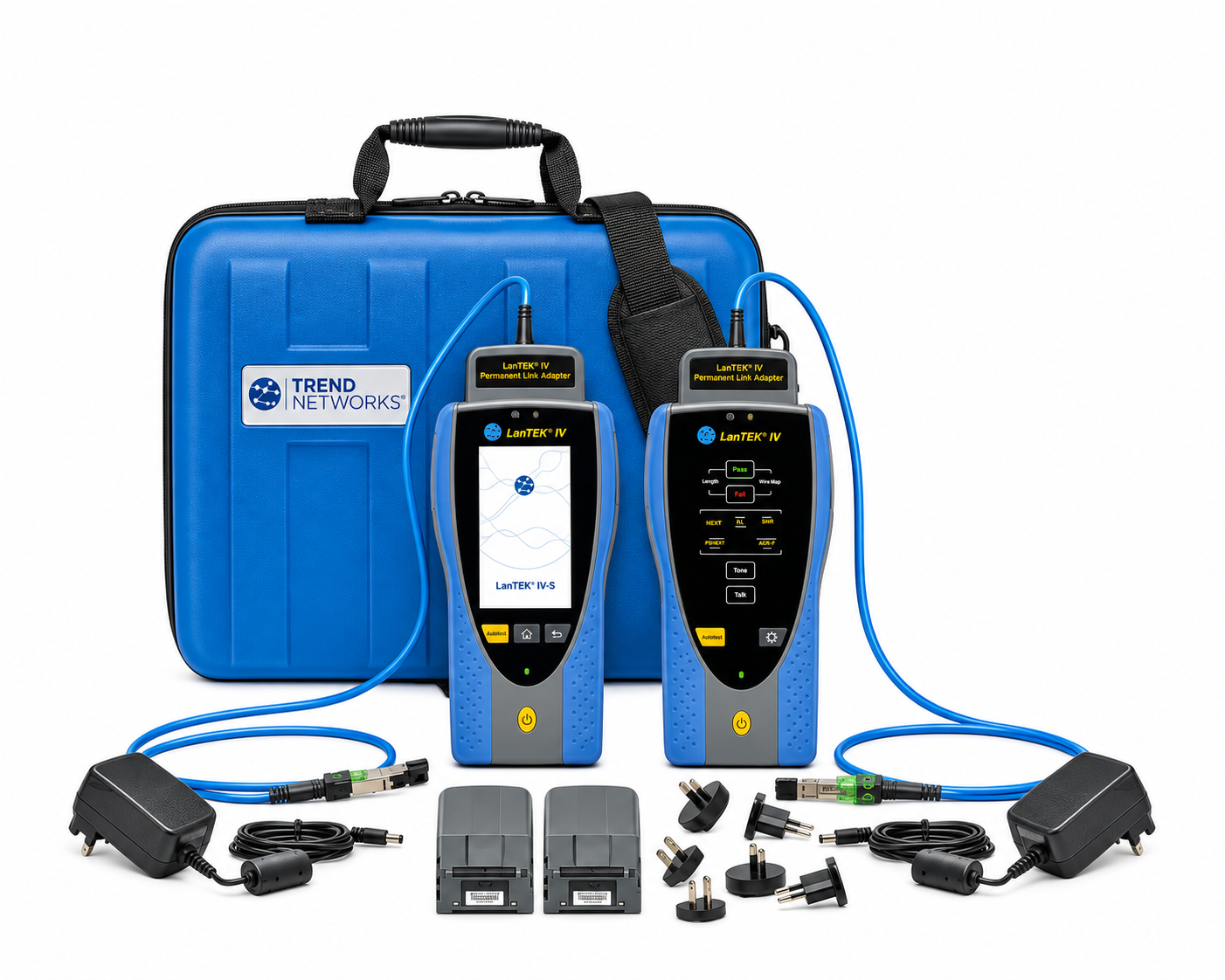
Mounted Up uses LanTEK cable testing technology to support diagnostics and certification within the equipment’s configured capabilities. The correct model, adapters, test limits, and link setup matter as much as selecting a tester.

Testing technology for supported structured cabling projects.

Handheld equipment for supported cable diagnostics and performance testing.
For certification work, the scope should identify the cable type and category, the links being tested, the selected performance limits, and the required reporting. Fiber and other cable types require the appropriate equipment and test method; share those details with your request.
What should you expect from certification results?
A useful report connects the findings to the cable links your team needs to identify later. Before testing, confirm the documentation your facility manager, IT provider, general contractor, or project specification requires.
- Clear link identification: agree on cable labels or identifiers so results can be traced to the correct run.
- Defined test limits: know which cable category, link configuration, and performance limits were selected.
- Recorded results: request the agreed pass/fail documentation and relevant measurements.
- A plan for failures: discuss whether termination work, replacement, or retesting should be quoted separately.
A failing result is useful information. It indicates that the tested link did not meet the selected limits and needs further review. A passing result applies to that test; it should be kept with your infrastructure records.
Help expedite your cable testing request.
The most effective request gives Mounted Up enough information to understand the site and your objective. Include the following in the form’s available project-detail fields:
- Project location: business name, address, and an on-site contact.
- Approximate cable count: number of runs or outlets that need attention.
- Cable details: known category or type; say “unknown” if you are unsure.
- Your goal: troubleshooting, installation verification, or certification with reports.
- Site access: access to cable endpoints, network rooms, and any restricted areas.
- Timing and requirements: preferred schedule, operational restrictions, and any project specifications.
Providing this information helps the team evaluate your request. Availability, site access, and the agreed scope determine scheduling.
Cable testing for Atlanta and surrounding commercial properties.
Mounted Up serves Atlanta, Metro Atlanta, and surrounding communities up to approximately 75 miles from its Atlanta base. Commercial projects can include offices, retail locations, warehouses, and facilities with network-connected security systems.
Submit the actual project address so the team can confirm coverage and plan the visit. Whether you are investigating one troublesome connection or reviewing a larger installation, begin with a clear testing objective.
Frequently asked questions
Can Mounted Up certify cables upon request?
Yes. Cable certification is available upon request. Share the cable types, project requirements, and reporting needs so Mounted Up can confirm the appropriate equipment, method, and scope.
Can existing cabling be tested?
Yes. Accessible existing cable runs can be evaluated within the agreed scope. Tell the team about labeling, endpoint access, and any known issues when requesting an estimate.
Does a connection light mean my cabling is certified?
No. A connection light indicates a connection condition detected by the equipment. Certification requires the appropriate test procedure and measurements against selected performance limits.
Will cable testing fix a slow network?
Testing can help identify physical cabling problems. Network performance may also depend on equipment, configuration, wireless conditions, or the internet connection. Findings help determine the next step.
Can I request reports for project closeout?
Yes. Include your closeout and reporting requirements with the request so the required format, link identification, and scope can be confirmed before testing.
How much does cable testing cost?
Pricing depends on the cable count and type, required tests, reporting, access, and site conditions. Submit your project information for a scoped estimate.
Know what is happening behind the connection.
Get the process started with your cable testing request. Tell Mounted Up what you need checked, where the work is located, and whether certification reports are required.
Your request opens the project form. Scope, pricing, and scheduling are confirmed after review.