
The Commercial Security Infrastructure Standard for 2026
Why Atlanta businesses are moving toward integrated security environments combining surveillance, access control, exterior lighting, structured cabling and network infrastructure.
Request a Commercial Security AssessmentUpdated August 2026
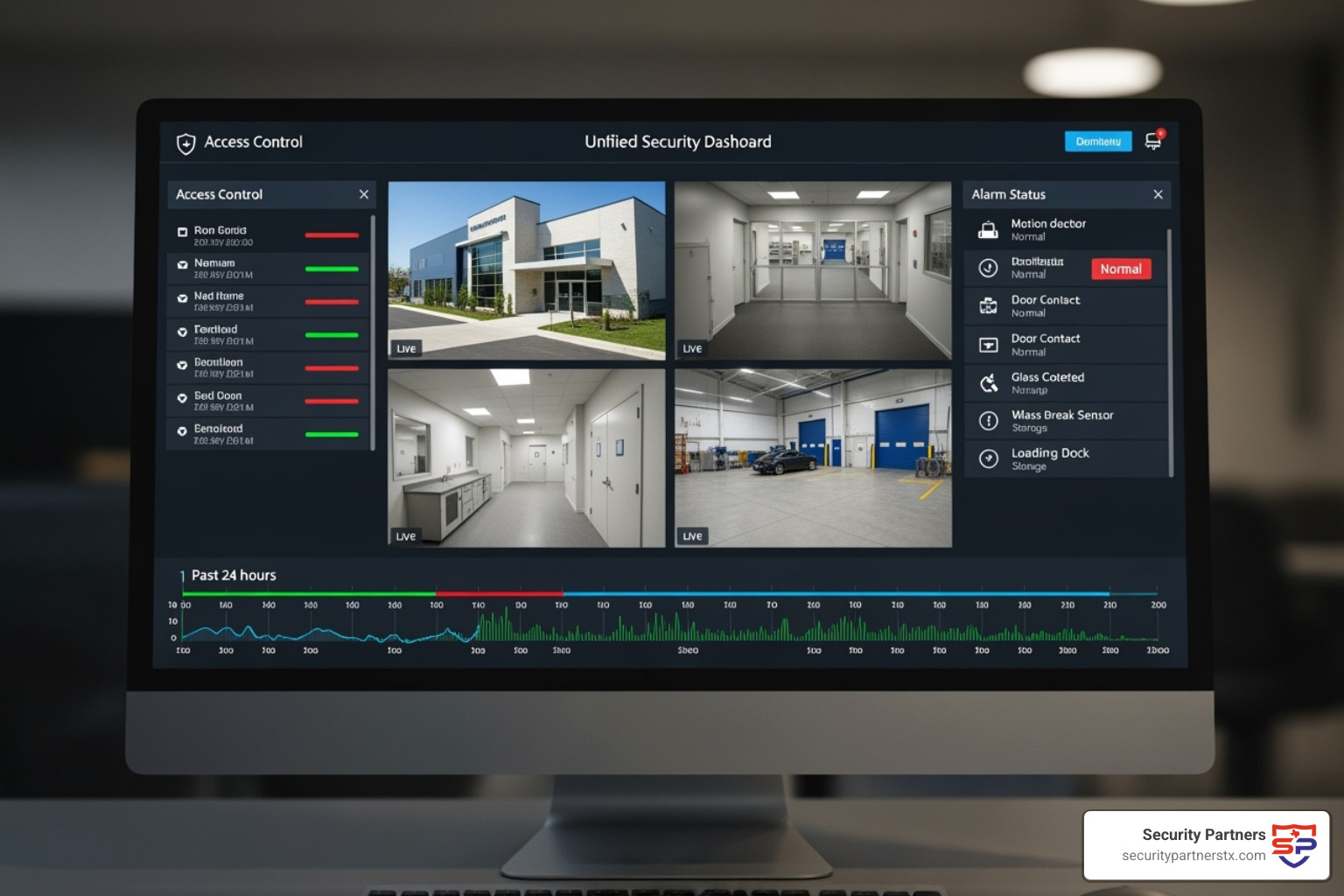
Commercial Security Is No Longer Just About Cameras
Modern businesses operate properties filled with employees, visitors, vehicles, inventory, valuable equipment and connected technology.
Protecting those environments increasingly requires multiple systems to work together instead of operating as isolated installations.
For businesses throughout Atlanta and Metro Atlanta, that means coordinating video surveillance, access control, exterior lighting, structured cabling, networking and intercom systems as part of a broader commercial technology infrastructure.
The objective is not simply to install more equipment. The objective is to design a security environment around the way the property, employees and business actually operate.

What Is a Unified Commercial Security System?
A unified commercial security system connects multiple physical-security and technology systems into one coordinated infrastructure.
- Commercial video surveillance
- IP security cameras
- Access control systems
- Video intercom systems
- Exterior commercial lighting
- Structured cabling
- Network infrastructure
- Enterprise Wi-Fi
The Systems That Work Together
Video Surveillance
Cameras provide visibility across entrances, parking areas, warehouses, loading docks and critical property zones.
Access Control
Electronic credentials help organizations manage access to doors, secure rooms and restricted areas.
Exterior Lighting
Strategic lighting improves visibility around entrances, parking areas and property perimeters.
Structured Cabling
Organized cabling provides the foundation required by network-connected security technology.
Network Infrastructure
IP-based cameras and access-control systems depend on reliable commercial networks.
Video Intercom Systems
Intercom technology can help verify visitors and manage controlled entry points.
Camera Placement Matters as Much as Camera Quality
High-resolution cameras provide limited value if important parts of the property remain uncovered.
Commercial surveillance should be designed around entrances, traffic patterns, valuable assets and existing property blind spots.
- Rear entrances
- Loading docks
- Employee entrances
- Side alleys
- Storage areas
- Secondary parking areas
- Building perimeter zones


Access Control Works Best When It Is Part of the Bigger System
Access control allows businesses to manage who can enter particular areas and how credentials are administered.
When combined with surveillance and network infrastructure, protected entrances can become part of a more coordinated security strategy.
- Card credentials
- Key fobs
- Mobile credentials
- Electronic door hardware
- Multi-door management
- Visitor entry verification

Lighting Is Part of the Security Strategy
Poor exterior illumination can create visibility problems for employees, visitors and surveillance systems.
Strategically placed commercial lighting can improve visibility around:
- Parking lots
- Walkways
- Building entrances
- Loading docks
- Service entrances
- Property perimeters
Structured Cabling and Networking Build the Foundation
Cameras and access-control systems are only the visible components of modern commercial security. Behind them is the infrastructure responsible for transmitting information and keeping connected devices operational.
Network Racks
Organized equipment helps simplify maintenance and future expansion.
Cable Pathways
Proper routing supports cleaner and more serviceable commercial installations.
Device Connectivity
Cameras, intercoms and access-control equipment increasingly depend on IP networks.
Labeling
Proper identification helps technicians maintain and troubleshoot connected infrastructure.
Network Capacity
Infrastructure should be designed around today's systems and future technology requirements.
Scalability
Good infrastructure planning can reduce unnecessary rebuilding as systems expand.
Why Integration Matters
Access Control + Surveillance
Protected entrances can be paired with corresponding camera coverage.
Surveillance + Lighting
Proper illumination can improve nighttime visibility inside important camera zones.
Cabling + IP Devices
Organized network infrastructure supports cameras, intercoms and access-control systems.
Industries That Benefit From Integrated Security
Warehouses & Distribution Centers
Loading docks, inventory areas, employee access, perimeter surveillance and exterior lighting.
Office Buildings
Employee entrances, visitors, restricted spaces and parking areas.
Multifamily Properties
Controlled entrances, common areas, parking surveillance and exterior visibility.
Automotive Dealerships
Lot surveillance, perimeter lighting and controlled building access.
Retail & Commercial Centers
Entrances, inventory areas, employee spaces and parking-lot security.
Houses of Worship
Entrance monitoring, parking visibility, access control and networking.
When Should a Business Upgrade Its Security Infrastructure?
- Existing cameras provide inadequate image quality
- Important areas have limited surveillance coverage
- Exterior areas are poorly illuminated
- Physical keys are difficult to manage
- Network infrastructure has expanded without a structured plan
- Multiple vendors have installed disconnected equipment
- The company is expanding into additional space
- Existing systems are becoming difficult to maintain
Commercial Security Planning for Atlanta Businesses
Atlanta's commercial environment includes offices, warehouses, logistics facilities, multifamily properties, dealerships, retail centers and industrial facilities with very different security requirements.
There is no single commercial security package appropriate for every property. System design should account for the building, operations, existing infrastructure, property risks and future growth.
Commercial Security FAQs
What is an integrated commercial security system?
It coordinates technologies such as video surveillance, access control, intercom systems, networking and structured cabling within a broader commercial infrastructure.
Does exterior lighting help commercial security cameras?
Yes. Proper illumination can improve nighttime visibility around entrances, parking areas, loading zones and perimeter locations.
Can an existing commercial security system be upgraded?
Often, yes. Existing cameras, cabling, networking and access-control equipment can be evaluated to determine what can remain and what should be modernized.
Does Mounted Up install fire alarm systems?
No. Mounted Up focuses on commercial security, surveillance, access control, structured cabling, networking, audio/video, technology infrastructure and exterior lighting.
Build a Commercial Security System Around the Way Your Business Operates
If your organization is expanding, operating with outdated equipment, experiencing security blind spots or managing disconnected systems, Mounted Up can evaluate your property and identify opportunities for improvement.
Surveillance • Access Control • Exterior Lighting • Structured Cabling • Networking
Request a Commercial Security Assessment